

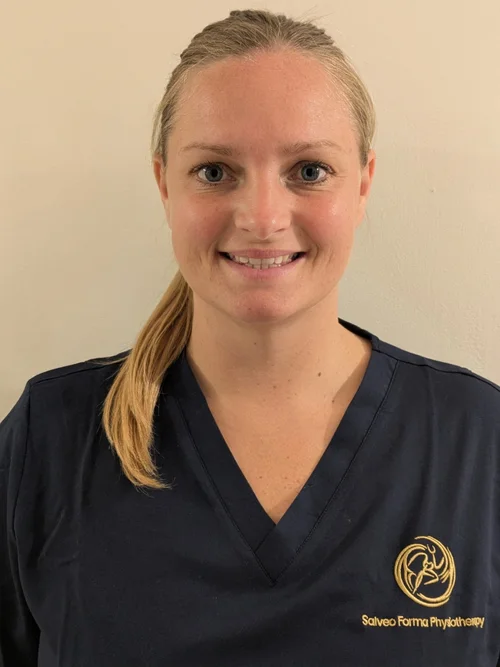
Emily Cross
Senior Older Person’s Physiotherapist
MCSP · MSc Rehabilitation Science (Physiotherapy) · BSc Biology · Graduated 2017
Emily works as a neuro-medical physiotherapist in the community, and trained on acute and hyper-acute stroke units — the most intensive stroke care the NHS provides.
Emily’s specialisms
About Emily
Emily came to physiotherapy through science. After a bachelor’s degree in biology she went on to study an MSc in Rehabilitation Science, graduating in 2017, and began her career in the NHS deliberately moving through as many specialties as she could.
That list is unusually broad: elderly care rehabilitation, musculoskeletal outpatients, surgical wards, respiratory wards, intensive care, orthopaedics, acute and hyper-acute stroke units, and community neurology. Very few community physiotherapists have stood in an ITU and a hyper-acute stroke unit.
She now works as a neuro-medical physiotherapist in the community, supporting people with neurological conditions who experience balance and coordination problems, weakness, fatigue, impaired walking, spasticity, contractures or pain. Most of that work is with older adults — stroke is overwhelmingly a condition of later life, and her elderly care background sits directly underneath it.
Her approach is holistic and built around the client’s own goals, in a setting that means something to them. She assesses, plans, delivers and then evaluates specialist interventions — the last step matters, because it is how you find out whether something is actually working. The aim throughout is that people understand and can manage their own condition, so independence and quality of life keep improving after she has gone.
She also aims to make it engaging. Rehabilitation that feels like a chore does not get done between visits, and what happens between visits is most of the recovery.
Outside work Emily is kept busy by her young family, and enjoys sailing, running and cycling. In her younger days she was a keen footballer, playing for Chelsea Ladies before going on to play in America.
Where Emily visits
If your town is not listed, call us — we very often cover it.
Common questions
Can Emily help with rehabilitation after a stroke?
Yes. Emily trained on acute and hyper-acute stroke units and now works as a neuro-medical physiotherapist in the community, so she has seen stroke recovery from the first hours on a ward through to long-term rehabilitation at home. That span is unusual, and it means she knows what the hospital was aiming for and what realistically comes next. Call 07384 590177 to arrange a visit.
Is it too late to make progress after a stroke?
Usually not. Most NHS stroke rehabilitation is intensive and then stops, and people are often told that recovery plateaus at six months — but strength, balance, walking and confidence all continue to respond to the right work well beyond that. Emily will assess honestly and tell you what she thinks is achievable, including if she does not think she can help.
Will I get exercises I can do on my own?
Yes. Emily’s approach is built around helping you understand and manage your own condition, so the plan is designed to be carried on between visits. She deliberately makes it engaging, because rehabilitation that feels like a chore does not get done — and what happens between visits is most of the recovery.
Arrange a visit with Emily
Call our Clinical Director for a free, no-obligation conversation. She will listen to your situation, tell you honestly whether we can help, and match you with the right specialist.