

Falls Aren't Just Part of Getting Older: What Actually Keeps You Steady at Home
Most falls can be prevented. That is the single most important thing to know, and it surprises a lot of people.
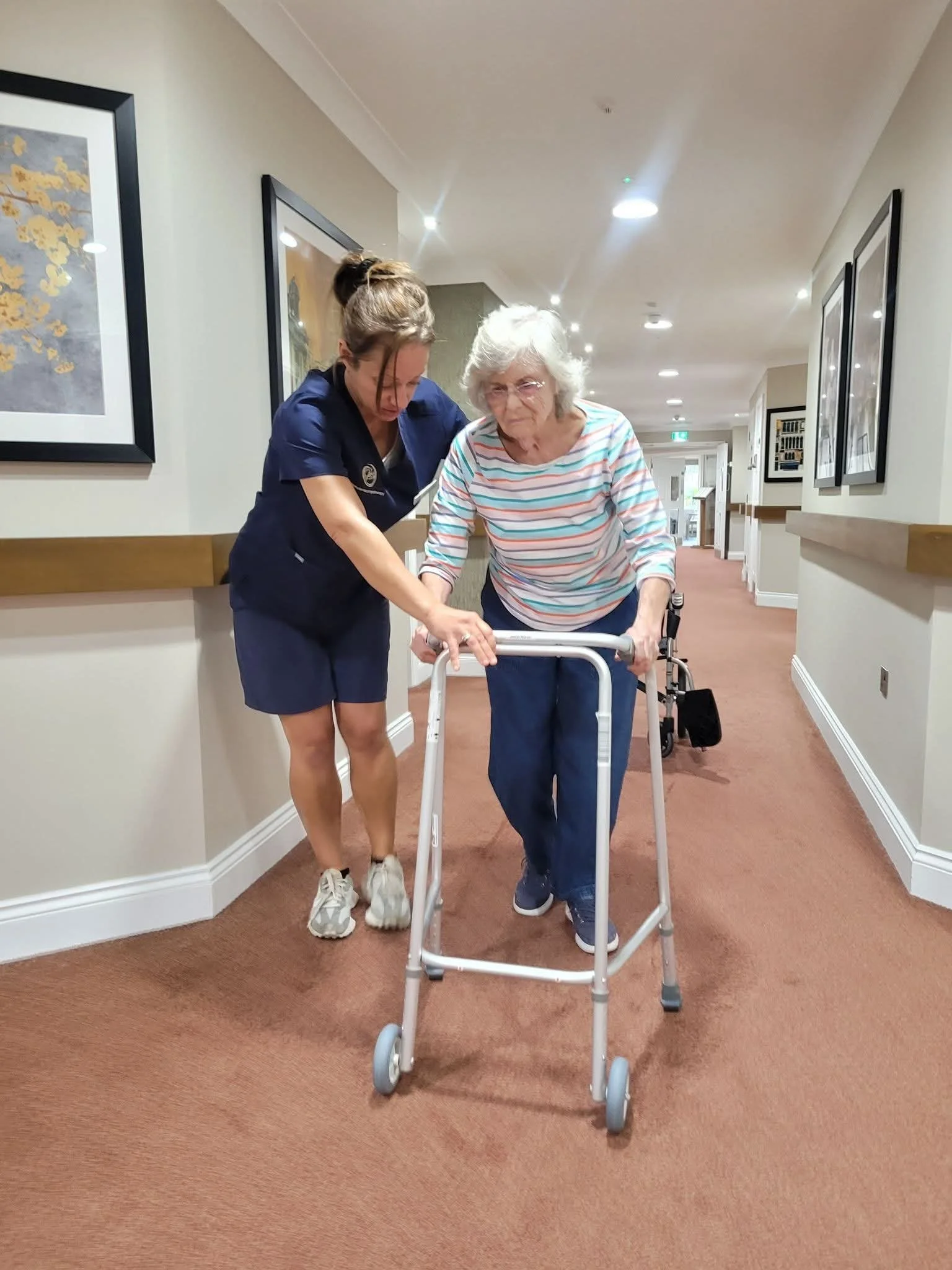
Falling is not simply "part of getting older". A fall almost always happens because several small things have stacked up — weaker legs, a bit less balance, a dark landing, a medicine that makes you light-headed, a worn pair of slippers. Change two or three of those things, and the risk drops considerably.
Perhaps you have noticed your mum hesitating at the top of the stairs, or your dad reaching for the furniture on his way across the room. Perhaps you have had a wobble yourself and would rather not have another. Either way, here is what genuinely works.
The short version
- Around one in three people over 65, and one in two over 80, fall at least once a year.
- The right kind of exercise reduces falls by about a quarter — some of the strongest evidence in medicine.
- Sorting out hazards around the home reduces falls by about a quarter too, and by more than a third for people already at risk.
- You do not need a GP referral to get a private falls assessment at home.
- The earlier you act, the more there is to work with. Waiting for a serious fall is the expensive option.
Why falls matter more than people think
The number that stops most families in their tracks is this one: falls led to around 210,000 emergency hospital admissions in England in a single year among people aged 65 and over.1
But the injury is often not the worst part. What tends to change someone's life is what happens afterwards — the confidence goes, they stop going out, they sit down more, their legs get weaker, and the next fall becomes more likely.
That downward spiral is preventable. It is also reversible, particularly if you catch it early.
Is falling just part of getting older?
No. Ageing does change muscle strength, balance and reaction time — that part is true. But a fall is the result of specific, identifiable causes, and most of them can be changed.
Think of it as a list rather than a verdict. Weak legs can be strengthened. A dim staircase can be lit. A blood pressure medication that causes dizziness on standing can be reviewed. A cataract can be treated.
"It's just her age" leads nowhere. "There are four things going on here, and we can change three of them" leads to a plan.
What actually works? Three things, in order
1 The right kind of exercise
This is the best-evidenced thing anyone can do. Across 108 studies involving more than 23,000 people, exercise reduced how often older adults fell by around 23%.2
But the type matters enormously, and this is where most people go wrong.
Walking is not enough on its own. What works is balance and strength work that is challenging and gets gradually harder — standing on one leg, sit-to-stands from a chair, heel raises, step-ups, sideways walking. Balance and functional exercises alone cut falls by around 24%; adding strength work takes that to around 34%.3
The key word is progressive. If the exercises stay easy, they stop working. That is why a physiotherapist sets them, watches you do them, and makes them harder as you improve.
2 A proper look around the home
Reducing hazards in and around the house cuts the rate of falls by around 26% — and by around 38% for people who are already at higher risk of falling.4
Here is the important detail, though: a tick-box checklist does not do it. The researchers behind that review found these interventions only work when there is a real assessment and proper follow-through, and that professional occupational therapy support is important for many people living at home.5
It is rarely the obvious things. It is the height of the favourite armchair, the route from bed to bathroom at 3am, the lip on the back door step, the rug at the bottom of the stairs, the grab rail that is in the wrong place by six inches.
3 A medicines review
Some very common medicines increase falls risk — particularly anything affecting blood pressure, sleep, mood or anxiety.
This is a five-minute conversation with a GP or pharmacist that families often never think to ask for. Ask specifically: "Could any of these be increasing the risk of falls?" It is one of the highest-value things you can do this month, and it costs nothing.
What the new NHS guidance says
In April 2025, NICE published brand new falls guidance for the NHS, replacing advice that had stood since 2013.6 Three points are worth knowing as a patient or family member.
Falls risk scores are out. NICE now specifically tells clinicians not to use risk-prediction scoring tools. Instead they should ask directly about falls and act on the answer.
A proper assessment is broad. It should cover walking, balance and leg strength — but also blood pressure lying and standing, medicines, eyesight, hearing, footwear, memory and mood, dizziness, bladder, diet and bone health.
The home itself counts. NICE says a home hazard assessment should be offered using a proper validated tool, and that ideally an occupational therapist should carry it out.6
That last point is why it helps to have both professions available from one team. A physiotherapist rebuilds strength and balance. An occupational therapist makes the home work with you rather than against you. You might need one or the other, and where you need both, we coordinate it between us — without you chasing a second referral.
When should you ask for a proper assessment?
NICE says a full falls assessment should be offered to anyone who has fallen in the past year and any one of the following applies:6
- They are frail
- They were injured badly enough to need medical treatment
- They blacked out around the time of the fall
- They could not get up off the floor by themselves
- They have fallen two or more times in the last year
That fourth point deserves attention. Not being able to get up unaided is one of the clearest warning signs there is, and it is the one most often not mentioned to anyone.
If any of these apply, that is the moment to act — not after the next fall.
"I'm fine, I don't need any help"
If you are arranging this for a parent, you may already have hit this wall. A few things that tend to work better than persuasion:
- Don't lead with falling. Lead with what they want to keep doing — the garden, the church, driving to see the grandchildren. Falls prevention is a means to that, not the goal.
- Frame it as a one-off check, not care. An assessment is not the start of losing independence. It is what protects it.
- Let someone else be the messenger. Advice from a physiotherapist frequently lands better than the same advice from a daughter.
- Offer a choice, not a decision. "Would Tuesday or Thursday suit better?" works better than "You need to see someone."
And if you are the older adult reading this: asking for an assessment is not admitting defeat. It is the same logic as servicing the car before the long drive.
Worried about falling? That worry is part of the problem
Between 40% and 73% of people who have had a fall go on to develop a real fear of falling.7 It is entirely understandable — and it quietly makes things worse.
The pattern is always the same. You feel unsteady, so you do less. Doing less makes your legs weaker and your balance poorer. That makes you feel more unsteady still.
Breaking that cycle is a large part of what home physiotherapy does. Practising on your own stairs, in your own hallway, with a therapist beside you, rebuilds confidence far faster than exercises in an unfamiliar clinic. Where worry persists, NICE also recommends considering talking-therapy approaches.6
Five things you can do this week
- Ask the question out loud. "Have you had a fall in the last year?" Include the trips that got laughed off.
- Watch them stand up from a chair without using their hands. Struggling here is one of the earliest signs of leg weakness.
- Book a medicines review and mention falls specifically.
- Walk the night-time route to the bathroom. Lighting, flooring, something to hold, anything to trip over.
- Check the slippers. Backless, worn or loose footwear is a genuinely common cause — and the easiest thing on this list to fix.
None of these replace an assessment. All of them make one more useful.
How we can help
Salveo Forma is a local team of HCPC-registered physiotherapists and occupational therapists, and we come to you — at home, in a care home, or in a nursing home — across Dorset, Hampshire, Wiltshire, and Somerset & Avon. Our therapists are experienced NHS clinicians.
A home falls assessment takes 60 minutes or more. We look at walking, balance, strength and confidence, we look at the home itself, and you get a clear written plan and a tailored exercise programme you can actually do.
Most people need one profession or the other. If physiotherapy is what will help, that is what you get. If the bigger issue is equipment, seating or managing daily tasks safely, an occupational therapist is the right person. And when both would help, we work together on it within the same team, so nothing gets lost between referrals.
No GP referral needed. Same-week appointments are available, and for urgent needs we aim to visit within 24 hours where we have availability.
Call Debbie Richards, our Clinical Director, for a free initial consultation. She will listen to what is going on and match you with the right therapist for your area and your situation.
Call 07384 590177Initial assessment £110 (60+ minutes). Follow-up visits from £55.
Common questions
Can falls really be prevented, or is it just bad luck?
Falls can genuinely be reduced. Exercise programmes cut how often older adults fall by around 23%, and reducing hazards around the home cuts it by around another quarter.24 Most falls come from several changeable causes rather than one unavoidable accident.
What exercises help prevent falls?
Balance and strength exercises that get gradually harder — sit-to-stands, heel raises, standing on one leg, step-ups, sideways walking. Balance work alone cuts falls by around 24%, and adding strength training takes it to around 34%.3 Walking on its own is good for health but does not reduce falls much.
Do I need a GP referral to see a private physiotherapist at home?
No. Call us directly on 07384 590177 and we will arrange a home visit, usually within the same week.
What happens in a home falls assessment?
A physiotherapist assesses walking, balance, leg strength and confidence, reviews any falls and medicines, and checks the home environment — stairs, lighting, flooring, bathroom, and chair and bed height. You receive a written plan and a personalised exercise programme. It takes 60 minutes or more.
Why does occupational therapy matter for falls?
Because the home is part of the problem. NICE recommends that a home hazard assessment ideally be carried out by an occupational therapist.6 Occupational therapists also advise on equipment, seating and everyday tasks like washing and dressing, which physiotherapy alone does not cover.
My mother refuses help. What can I do?
Start with what she wants to keep doing rather than with falling, and frame it as a one-off check rather than the start of care. Advice often lands better from a therapist than from family. A free phone call with our Clinical Director costs nothing and commits you to nothing.
Do you visit care homes and nursing homes?
Yes. We provide physiotherapy and occupational therapy in residential and nursing homes as well as private homes, with programmes tailored to each resident and designed to work alongside care staff.
Is it too late if she's already had several falls?
No. People who have already fallen are the group who benefit most from home hazard work, with around 38% fewer falls in higher-risk groups.4 Strength and balance improve at any age.
References
- National Institute for Health and Care Excellence (2025) New guideline will help cut falls and related hospital admissions for older and at-risk people. NICE news, 29 April 2025. View source
- Sherrington, C. et al. (2019) 'Exercise for preventing falls in older people living in the community', Cochrane Database of Systematic Reviews, 1, CD012424. View source
- Sherrington, C. et al. (2020) 'Exercise for preventing falls in older people living in the community: an abridged Cochrane systematic review', British Journal of Sports Medicine, 54(15), pp. 885–891. View source
- Clemson, L. et al. (2023) 'Environmental interventions for preventing falls in older people living in the community', Cochrane Database of Systematic Reviews, 3, CD013258. View source
- Cochrane (2023) Cochrane review shows that reducing trip hazards and decluttering can prevent falls among older people living at home. View source
- National Institute for Health and Care Excellence (2025) Falls: assessment and prevention in older people and in people 50 and over at higher risk. NICE guideline NG249. View source
- Canadian Geriatrics Journal, Fear of falling in older adults: a scoping review of recent literature. View source
This article is general information and does not replace an individual assessment. If you are worried about falls, speak to your GP or call our team on 07384 590177. Last reviewed: July 2026.